
Clinical psychologist Dr David Coleman discusses why some young people start to bully others online.
Continue reading
Clinical psychologist Dr David Coleman discusses why some young people start to bully others online.
Continue reading

Childline.ie’s Siobhán Harvey and Sinéad McKee talk about digital resilience and what to do when things go wrong.
Top Tip: Support yourself by talking to other parents or friends who have gone through a similar situation.

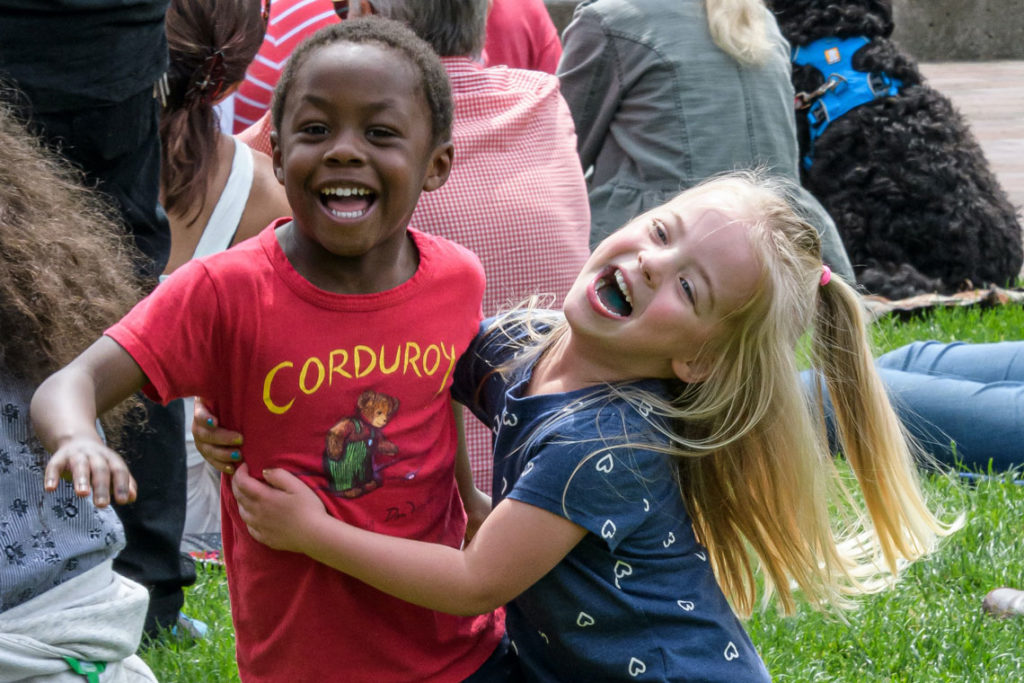
“Just as birds fly and fish swim, children play” (Landreth, 2002)
We all know that children love to play but did you know that it’s not just a pleasurable activity for them. It’s a vital part of how they grow and develop.
Play is an integrating mechanism. Play organises a child’s thinking, feelings, relationships and physical body, so that everything comes together to support development and learning. The UN Convention of Children’s rights has marked play as a universal right of children in supporting their development.
The benefits of play involve supporting a child’s growth across four areas – social, emotional, cognitive and physical development.
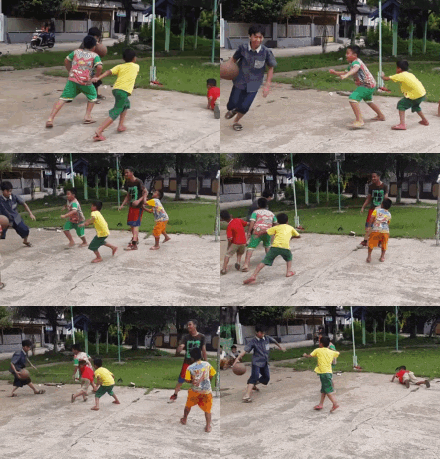
Children acquire social skills with others by listening, paying attention and sharing play experiences.
Play supports children to explore their feelings, develop self-discipline and learn how to express themselves.
It increases their ability to learn problem solving skills, negotiation and conflict resolution.
Playing fosters positive emotions and supports the growth of resilience.
Play experiences reduce stress in children and help them make sense of their bigger feelings.
Engaging in play activities encourages children to develop language and communication skills.
When children are given the opportunity to choose their own play activities, they can express their choices in words and converse freely.
They learn how to make decisions and make choices, building their confidence and self-esteem.
Engaging in physical play activities can support the development of balance, co-ordination, fine and gross motor skills.
As the child is using energy while engaging in physical play, it also promotes a better sleeping and eating pattern.
Playing with your child can foster a positive attachment and strengthen your bond. It can support your child to learn new skills and help you learn more about them.
Here are some examples of play activities under the following headings:
Social Development: Any card games
Emotional Development: Making dens, a castle or a pirate ship from duvets, cushions, chairs and or cardboard boxes.
Cognitive Development: Jigsaws or matching games
Physical Development: Hopscotch or skipping
For more ideas on different play activities please see the links below.


“For infants and young children, mental health may be defined as the capacity to grow well and love well.”
When we talk about our childhood, there are probably very few of us who can recite memories from our infant years so it can be mindboggling to grasp just how much importance they have in how we grow and develop!
In fact, it is during those pivotal early years of development that we begin to establish foundations for positive mental health and wellbeing throughout our lifespan.
Infant mental health refers to how well a child develops socially and emotionally from birth to three years and how their first relationships influence them.
Starting from birth, babies seek out human connections and before they can crawl, infants can recognise different emotions – sadness, anger and happiness – and know what tone of voice matches the appropriate facial expressions.
Babies and infants also experience all these emotions themselves. However, in these early years, infants cannot manage their feelings on their own and need help to soothe, settle and deal with them.
This is where their parents and caregivers come in to offer a trusting and safe relationship by responding and nurturing those early feelings.
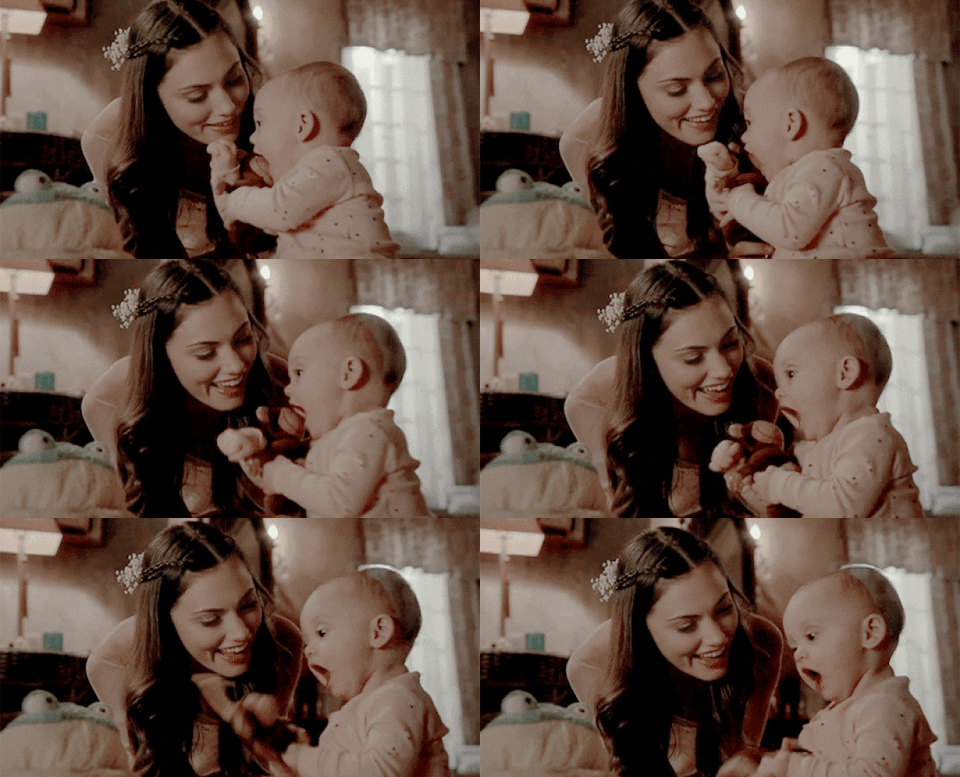
So what does all that mean if you are a parent and want to promote your infant’s mental health?
There are a number of important interactions that can prepare the way for strong, healthy, social and emotional wellbeing in your infant:

Children and young people across Ireland have been challenging themselves to help raise vital funds to keep ISPCC Childline listening.
Continue reading