World Suicide Prevention Day: When a child feels there is no way out, we need to be there

World Suicide Prevention Day: When a child feels there is no way out, we need to be there

This World Suicide Prevention Day, Childline by ISPCC is shining a light on what children and young people are telling us about suicide, and why having somewhere safe to talk can matter so much.

Every day, children and young people across Ireland contact Childline about some of the most difficult experiences in their lives.

So far in 2026, Childline has received 877 contacts about suicide – more than three every day.

Behind every one of those contacts is a young person with their own story, worries and reasons for reaching out.

For some, the conversation may be about suicide generally, or concern for a friend or family member. But in 83% of contacts about suicide, the young person is experiencing suicidal thoughts themselves.

Around 70% of all suicide-related contacts are considered high or very high risk.


What are children telling us?

There is rarely one simple reason why a young person may experience suicidal thoughts.

Through conversations with Childline and insights from our nLight research project, we see children speaking about feeling unsupported, disbelieved or trapped.

Abuse or neglect at home can be a factor. Bullying, social isolation and difficulties in relationships also feature in conversations.

Young people express feelings such as:

“Nobody cares.”

“Nobody loves me.”

“People would be happier without me.”

We also hear from children who are worried that a friend may attempt suicide, while some young people have told Childline about being encouraged by others online to harm or kill themselves.

These conversations are a powerful reminder of the importance of taking children seriously when they tell us they are struggling.


Young people don’t always use the word ‘suicide’

Understanding the language children use online is also increasingly important.

Through ISPCC’s involvement in the nLight research project, we see examples of children using terms such as “unalive” when discussing suicide online.

Young people’s language constantly evolves, particularly in digital spaces. They may use alternative words to talk about difficult subjects, including language that can avoid automated moderation or red-flagging on digital platforms.

For parents, carers, professionals and those designing online services for children, listening to how young people communicate distress can be just as important as listening for particular words.


Sometimes a child simply needs someone to listen

The average Childline engagement with a young person contacting us about suicide lasts 45 minutes.

That is 45 minutes in which a young person has someone focused on them, listening without judgement and giving them the space to express what they are thinking and feeling.

The majority of those contacting us about suicide are low or first-time users of Childline. For some, reaching out may be one of the first times they have spoken about what they are experiencing.

Our role is to listen, support and empower children and young people, and to help them identify the support available to them.

Childline is available 24 hours a day, 365 days a year, because we never know when a child might decide that they are ready to talk.


Help us be there when a child reaches out

No child should have to face their darkest moments alone.

Your support helps ISPCC ensure Childline can continue to be there whenever a child or young person needs someone to listen – whether that’s in the middle of the afternoon or late at night.

By donating to ISPCC, you can help us continue to listen, support and empower children and young people across Ireland.

Donate today at ISPCC.ie.


If you need support

If you are a child or young person and something is worrying you, you can talk to Childline about anything that’s on your mind.

Call Childline free on 1800 66 66 66 or use Live Chat at Childline.ie.

If you or someone you know is in immediate danger, call 112 or 999.

Summer Break, Silent Struggles: Childline reports a rise in suicide contacts

Boys earring wetsuits walking from the beach on a sunny day in autumn. They are on a staycation with their family to lower their carbon footprint and support the local economy.

Summer Break, Silent Struggles: Childline reports a rise in suicide contacts

What will be the most heartbreaking day of the summer? Last year, it was July 20 – the day that Childline received the most contacts from children and young people who were experiencing abuse, neglect and isolation during what is supposed to be the best days of their lives. 

Unfortunately, the summer of 2026 is already shaping up to be a difficult one for many children and young people. The Childline team already has experienced a noticeable spike in contacts related to suicide last week.

The longer days and the break from the routine of school life means that children face an increased risk of isolation, exposure to danger online, abuse and neglect. 

Many of these children dread the summer and count the days to go back to school. There, they can be themselves without fearing the consequences and teachers are available to give them the support that they need.

Take Eabha* who experiences food poverty, social isolation and abuse from her mother who drinks to numb her own pain and takes out her frustrations on her daughter. Eabha will spend the long, lonely summer holidays looking after her young siblings, lying to her friends to explain why she can’t meet them and doing everything she possibly can to ensure that her mother doesn’t lose her temper.

Sam* told a Childline volunteer about how his emotionally abusive family make him feel unloved and unable to express himself for fear of being taunted and bullied. He says that he hates being at home.

For Lily*, a carer for her critically ill parent, school offers a break from the constant pressure she experiences at home. She doesn’t want her friends to pity her so she shares little about what her life is really like.  

Elizabeth Donlon Fox, National Childline Listening Coordinator, says that our dedicated team of staff and volunteers hear similar stories on a daily basis: “When we think of summer, we think of endless, carefree days, but for so many children and young people, it’s a time of isolation, fear and neglect. It is truly shocking what so many young people have to endure and the lasting consequence of this trauma on their lives.”

For so many children, summer is a time of heartbreak, not happiness, but Childline is here to support them 24/7. To support Childline in this crucial work, please donate now.

ISPCC offers support to children and young people at childline.ie and at 1 800 66 66 66. 

  • *Names have been changed

Why a ban will not protect us from the dangers of social media

Why a ban will not protect us from the dangers of social media 

As yet another politician extols the merits of banning social media for those under 16 in the name of online safety, many of us working in children’s rights find ourselves dismayed by the persistence of such quick-fix, headline-grabbing proposals. These measures, while superficially appealing, shift responsibility onto parents and children, rather than addressing the role of the technology companies whose platforms underpin much of the harm. 

On Sunday, June 14th, more than 140 children’s rights organisations across Europe, including the ISPCC, co-signed an evidence-based letter to the European Commission making clear that it is neither fair nor effective to require children to bear the cost of rectifying problems that are fundamentally embedded in the design and business models of online services. 

A blanket ban risks entrenching harm by diverting attention away from where meaningful accountability should lie. Instead, we should be insisting on a strict “safety by design” standard, supported by privacy-preserving and robust age assurance mechanisms. This approach places responsibility on platforms to create safer environments from the outset. 

Efforts to improve online safety must not come at the expense of children’s rights — including their rights to information, education, participation and play. A crude age-based prohibition would not only fail to eliminate harm but would likely displace it, pushing young people towards less regulated or entirely unregulated spaces where risks may be even greater. 

Furthermore, such bans risk diminishing the urgency to address the systemic issues that drive harm online. These include behavioural profiling, addictive and manipulative design features, recommender systems that amplify harmful content and commercial practices that exploit children’s data and vulnerabilities.  

A more constructive response must recognise that responsibility is shared. Parents, platforms and young people all have a role to play.  

Many of the risks children face online stem from the design of the platform. Features that prioritise engagement over wellbeing can expose young users to manipulation, exploitation and grooming — often in ways that are difficult to detect. Children who do not recognise such harms are unlikely to report them. 

It is essential that young people learn to question what they see online, to understand how algorithms shape their experience and to trust their instincts when something feels wrong. The impact of harmful online content inevitably spills into children’s offline lives, affecting their wellbeing. 

At the ISPCC, our priority is to empower young people with the resilience and coping skills they need to thrive in an increasingly complex digital world.  

Our Childline Listening Service operates 24 hours a day, every day of the year, ensuring that any young person who needs to talk will always find someone ready to listen. 

ISPCC response to RTE Investigates programme: Children in care: one year following a system in crisis

ISPCC response to RTE Investigates programme: 

Children in care: one year following a system in crisis

The report by RTE Investigates into the family law court system documenting the crisis in the care of this country’s most vulnerable children comes as no surprise to those of us working to safeguard children and young people in Ireland. There is no doubt that the system is utterly broken, despite the best efforts of those working within it.

It is soul-destroying to hear a teenage girl describe herself as an ‘Amazon parcel’, adding that “when you are being moved around from house to house, it felt like, we are kind of second choice”.

When a child in care feels like an Amazon parcel, it tells us that they’ve learned to see themselves as an inanimate object that needs to be processed and moved around, a burden on the system and not a real person.

At ISPCC, we understand the ongoing trauma faced by young people in care, who spend their lives being moved from place to place and dread their 18th birthday. This milestone is not a time of joy instead it signifies the removal of the State safety net, such as it exists for them, and an uncertain future ahead.

As a society, we should be appalled that some of our most vulnerable children and young people are treated like this and we must understand that the legacy of this trauma will have a defining impact on their lives.

We believe that the key is early intervention; the first step is to support families in their home. We support Tusla’s local integrated service model, a streamlined process of one file for one child, ensuring that no child gets lost in the system.

We call for greater after-care so that young people are properly supported once they turn 18, and greater in-house residential care provided by Tusla so that it is not necessary to use unregulated providers, irrespective of the budget constraints. Additional supports for foster carers are essential.

While there are examples of young people surviving the system and breaking the cycle of need, these are outliers.

We must increase the voice of the child in the courts and listen to the children and young people who need us.

We must provide proper help and support for children and young people placed in care.

Every child deserves a protected childhood.

As a society we simply have no excuse for failing to provide it.

ISPCC offers FREE online mindfulness workshops for children and teens

Join us online on January 16th to explore how mindfulness can make a positive difference to children and young people. ISPCC is offering three free workshops for primary and post primary school students. 

Each of the three sessions are interactive, directed at the relevant developmental stage of the attendees and designed to be engaging and playful in nature. They last 30-40 minutes and will be presented by Victoria Howson who is ISPCC’s Shield Anti-Bullying Programme’s Community Engagement Manager as well as a trainee Educational Psychologist with the HSE.

The first workshop at 9.30am is dedicated to exploring how mindfulness can help teens navigate academic pressure, social dynamics and emotional challenges. Through guided practice, relatable examples and reflective discussions, students will discover concrete strategies for focus, calm and self-awareness that they can seamlessly incorporate into their daily lives. 

The second session at 11am is aimed at pupils in junior infants, senior infants, first and second classes and it will introduce them to mindfulness through simple stories, movement and sensory exploration. They will learn age-appropriate techniques to help deal with overwhelming feelings.  

The third workshop at 11.55am is aimed at those in third to sixth classes and through interactive activities, guided breathing and reflective exercises, attendees learn how mindfulness can support focus, emotional balance and everyday wellbeing.  They will gain concrete strategies that are applicable both at school and at home. 

The aim of these sessions is to introduce children and teens to key tools and thought process that they can utilise to reduce anxiety, navigate emotional challenges and deal with pressure. It is also to encourage participants to make the best of every day they have and to understand that it’s okay to have feelings, even uncomfortable ones, they don’t have to be ignored. 

Teachers will need to provide a screen and speakers for the workshops.  

To learn more about the workshops and to register, go to ISPCC Webinars – ISPCC

Behind the closed doors of homes across Ireland, many children suffered in silence this Christmas* – but Childline was there for them

Behind the closed doors of homes across Ireland, many children suffered in silence this Christmas – but Childline was there for them

“It’s such a hard time of year to feel so alone, I haven’t spoken to anyone today, I wish things were different, like it is in the movies, but it’s not. It was brilliant to be able to call Childline, I knew that you would be here for me and it does help a little.”  Emma*, 14. 

Today (December 26th) is set to be one of busiest days of the year for Childline with the team expecting that more than 300 contacts will be made to Ireland’s only 24-hour listening service for children and young people  

Dublin, December 26th, 2025 – Childline reveals that today (St Stephen’s Day, 2025) will be the busiest day of the year for Ireland’s only 24/7 listening service as children come to terms with what they have experienced over the Christmas* period.  The dedicated Childline team is expecting that more than 300 contacts will be made from children and young people across Ireland. 

Heartbreaking data also reveals that over a three-day Christmas period (December 23rd, 24th and 25th) whilst many of us were enjoying gifts, treats, twinkly lights and Santa, Childline received 615 contacts from children who turned to the team because Christmas for them was not a time of joy but one of neglect and misery. Shockingly, seven young people turned to us with suicidal thoughts.

Bullying, abuse, neglect, mental health, substance misuse, strained family relationships and grief are just some of the many reasons children turn to Childline – reasons that sadly are even more pronounced during what is meant to be a magical time of the year.

Additional statistics from Ireland’s only 24/7 listening service for children and young people reveal:   

  •                The Childline team spends the equivalent of 146 full days a year talking to children and young people in immediate crisis
  •                35children and young people a year are in the process of trying to take their own life whilst in contact with the Childline team
  •                Childline receives over 2,300 contacts a year in relation to sexual, physical and emotional abuse
  •                300 children a year contact Childline about sexual abuse involving rape and being forced to watch and/or perform sexual acts    

Over the last five years, there has been a noticeable increase in the number of children engaging with Childline who are at high risk of harm. Sadly, such stark revelations come as no surprise to the dedicated team of staff and volunteers at ISPCC.   

The Childline team know they are an essential support for so many neglected children, and Childline is open 24/7 to any child for any reason at Christmas, as it is throughout the year. 

“Christmas is supposed to be the one day when families spend time together in peace and harmony,” said volunteer Joe Keane. “However, for children who call Childline at Christmas, the holiday can be one of the loneliest and most difficult times of the year. As a volunteer, being there on Christmas Day means I can make sure they feel listened to and heard.”

John Church, CEO, ISPCC said: “For too many children and young people, Christmas simply doesn’t happen. Too many don’t have the Christmas that they dream of and deserve. Instead, a day that should be full of joy is nothing special and sometimes a lot worse. They turn to Childline for support, and our amazing staff and volunteers are there for them 24/7 over Christmas, as they are throughout the year. Without help from public donations, we would simply not be able to be here for every child who needs us.” 

To help Childline continue to be there for children go to ispcc.ie   

*Christmas statistics refer to December 23, December 24 and December 25 

* Contacts refers to all contacts (chats/phones) that dial 1800 66 66 66/connect to LiveChat  

ISPCC honoured to announce million-euro funding for project to combat child grooming

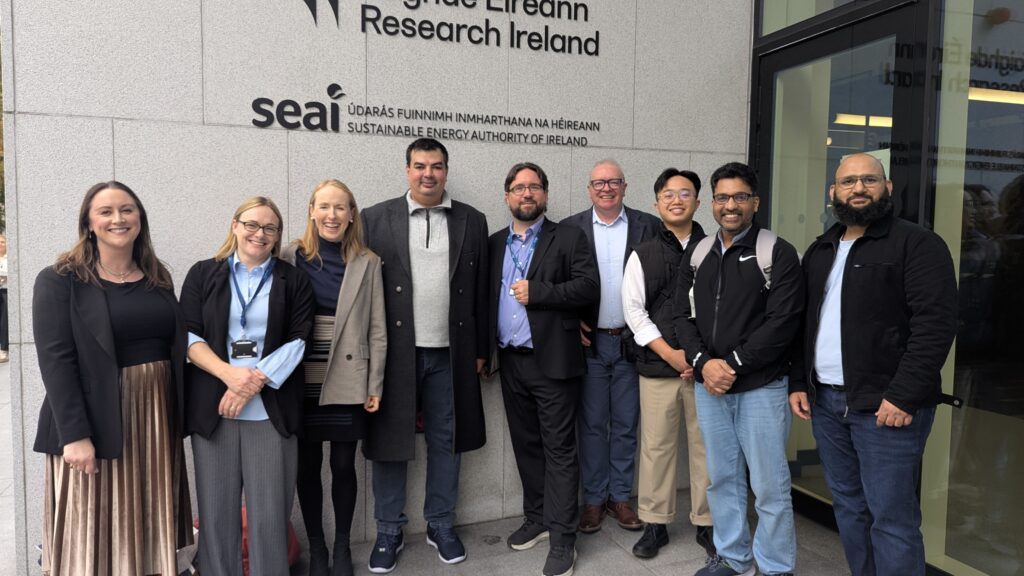
The GroSafe team, Fiona Jennings, ISPCC Head of Policy and Public Affairs,  is pictured on the left

ISPCC is honoured to announce that GroSafe, the technology-enabled safeguarding platform designed to combat child grooming through education, support and reporting, has received the Prize Award from Research Ireland’s National Challenge Fund in the OurTech pillar.

This acknowledgement of potential of GroSafe to have an incredible impact on the lives of so many children and young is extremely welcome and will enable the GroSafe team to make a true societal impact.

By empowering children and caregivers through this platform, the GroSafe team aims to build societal resistance, reduce exploitation and foster a culture of safe and trusted disclosure. The project is led by TU Dublin’s Dr Christina Thorpe and Dr Matt Bowden and ISPCC’s Head of Policy and Public Affairs, Fiona Jennings, acts as Societal Impact Champion.

The GroSafe project is one of six research teams across four challenge programmes under the National Challenge Fund, to receive part of €8 million in prize phase funding. Funded by the EU’s Recovery and Resilience Facility, the Fund calls on researchers to identify problems related to Ireland’s Digital Transformation and work directly with those most affected to solve them.

Fiona Jennings, ISPCC Head of Policy and Public Affairs, said the project is specially focused on “how children and young people are groomed into criminality or for sexual exploitation purposes.“We are extremely grateful that the possibilities offered by GroSafe have been acknowledged by the Prize Award from Research Ireland’s National Challenge Fund.

“The GroSafe team has gone to great lengths to ensure that the voices of stakeholders were heard and that their needs and requirements were understood. In particular, I believe that the engagement with children is the perfect example of true participation in action.

“The ISPCC wants to particularly acknowledge the steadfast vision, dedication and determination of the leadership provided by Dr Christina Thorpe and Dr Matt Bowden. They have ensured that the GroSafe potential for real societal change will be realised.

“As Societal Impact Champion, I am increasingly convinced that the only way to meaningfully tackle child grooming is by working together cohesively and respectively. I also want to acknowledge the incredible input of Research Ireland. I have been hugely impressed by the design of the National Challenge Fund competition and the continuing support and mentoring offered by members of Research Ireland throughout the process.”

ISPCC reports shocking statistics on sexual abuse, rape, trafficking and violence as it launches national Christmas appeal

“For too many children and young people, Christmas doesn’t mean presents or a happy day full of warmth and safety. Instead, it means abuse, neglect and loneliness. It breaks my heart to know that it can be nothing but a living nightmare for many of our young people across this country. Take a moment to think of all the young people in your community who could be going through this behind closed doors, alone, afraid, feeling unloved.”

Continue reading

ISPCC attends the Joint Committee on Artificial Intelligence

It was an honour to be invited to attend the Joint Committee on Artificial Intelligence and discuss the impact of AI on children and young people. ISPCC’s purpose is to protect childhood, and we believe that it is crucial to ensure that AI technologies are designed safely and ethically, with a child-rights approach.

The meeting of Joint Oireachtas Committee on Artificial Intelligence was a wonderful opportunity to share the insights of our colleagues in ISPCC who have direct daily engagement with children.

While there are legitimate – and grave – concerns about the future development of AI, it can also be used as force for good. 

ISPCC CEO John Church emphasised that the voice of the child is essential when formulating policy in this area, while Head of Policy and Public Affairs Fiona Jennings stressed ISPCC’s involvement in research projects underpinned by AI technologies – GroSafe and NLight – as well as the Children’s Online Redress Sandbox project which will establish a first-of-its-kind mechanism to advance child online safety through collaboration across sectors, borders and generations utilising a regulatory sandbox methodology.

GroSafe is funded by Research Ireland and aims to develop a technology-enabled solution to build societal resilience against child grooming.

NLight, funded by Safe Online, is a deployable text analysis tool that allows for better data and sentiment analysis of our Childline webchat service.

 She also discussed the Children’s Online Redress Sandbox project which will establish a first-of-its-kind mechanism to advance child online safety through collaboration across sectors, borders and generations.

At ISPCC, we believe that children and young people need to be educated on how to use AI technologies responsibly and productively. Legislators must champion a robust regulatory system that supports safe and ethical design of AI technologies. A cross-government coordinated approach with a national policy focus is needed, situated in the Department of An Taoiseach. The proposed AI office and AI observatory could offer this opportunity.

Every child has the right to lead a better, happier, safer childhood. It is our hope that working with our partners in the Irish Safer Internet Centre and on novel solution-focused projects, we can ensure that the rights of children and young people are protected as AI technologies evolve.

The other organisations represented at the meeting included the Ombudsman Youth Advisory Panel, National Youth Council, Children’s Rights Alliance, National Parents Council, BeLong To, CyberSafeKids, Irish Traveller Movement, spunout and Webwise.