Parents, face your fears, teach your children to be safe online with FREE webinars from ISPCC

January 22, 2024

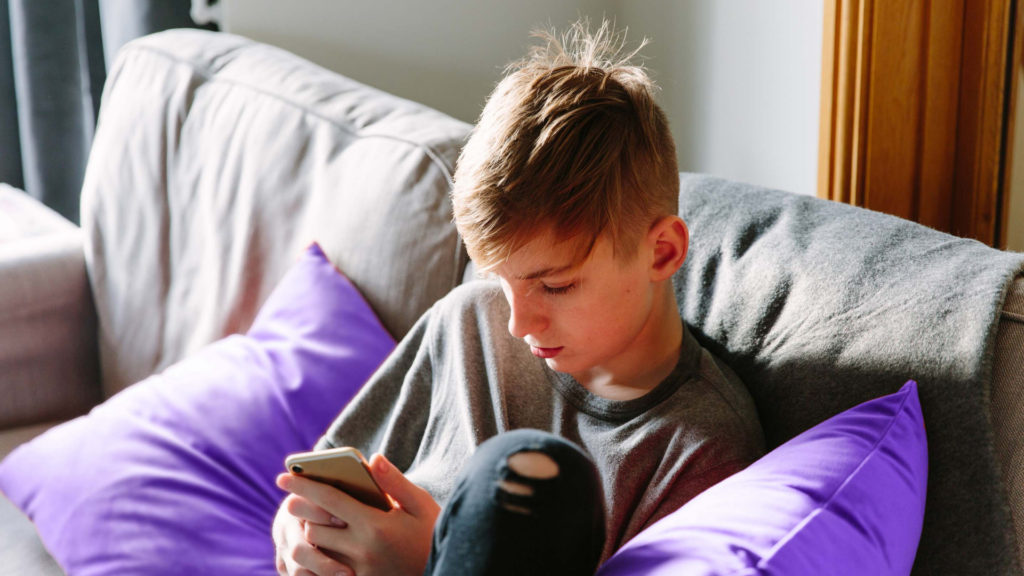
New year, new you, new evolutions in the online world. One thing we know for sure is that the online landscape is ever-changing, and that’s a scary prospect for even the most tech-savvy of parents. 

But ISPCC can help equip you with the tools to teach your children how to stay safe when they’re online while also encouraging them not to fear new technology. 

ISPCC parenting lead Siobhan Harvey and Niamh Clarke, Manager of ISPCC Smart Moves programme, are hosting a one-hour webinar designed to help parents to learn more about online safety and to develop the key skills necessary to support their child. 

But it is also important to involve your child in learning how to safely navigate online. So the following day, ISPCC is hosting a second, 30-minute webinar aimed at children aged 12 years and over accompanied by a parent.

The aim of this series of webinars is to help parents and carers to recognise ways to interact with your child’s online world and day-to-day experiences and to allow young people to discuss their feelings in a safe space.

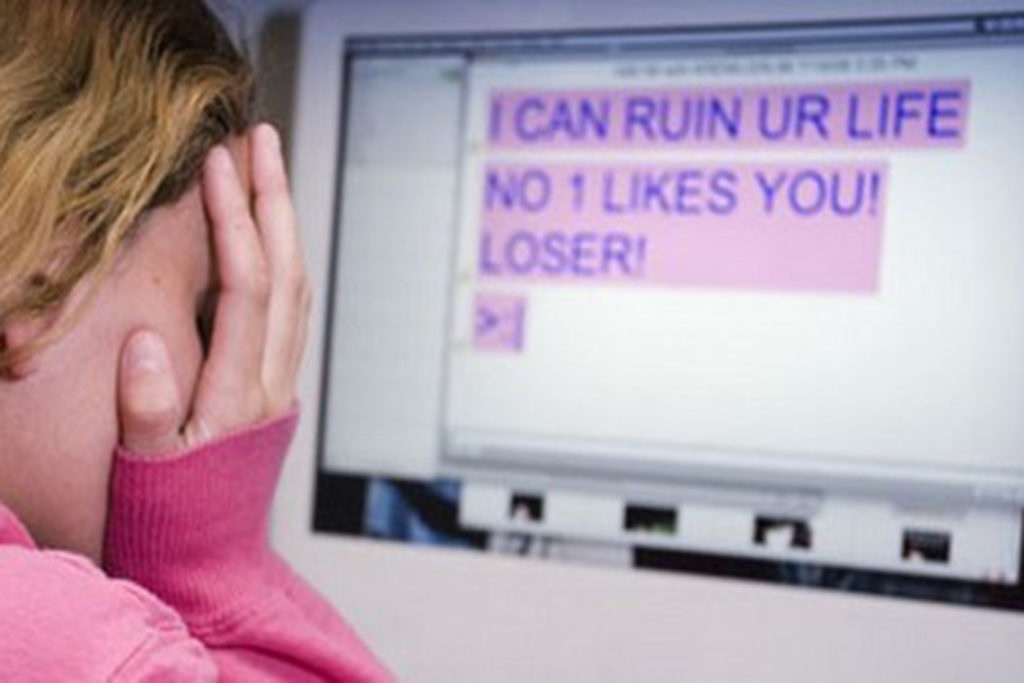
Our goal is to encourage parents to reflect on how you might support your child to navigate the online world, as well as implement digital boundaries. We will provide guidance on how parents and young people can deal with cyberbullying and upsetting content online and we will offer practical solutions and tips to help your child stay safe online.

ISPCC’s webinars will provide a non-judgemental place to ask questions, while also offering key take-aways in bite-size, easily digestible chunks. 

We at ISPCC know only too well the importance of staying safe online. Children and young people tell us their concerns through our 24/7 Childline listening service, through our therapeutic services and through our Shield Anti-Bullying programme. 

We understand that parents, carers and young people are concerned that our increasing reliance on digital technologies are exacerbating feelings of anxiety and depression among our youth, and we’re here to listen and to help.

Webinar details are:  

  • Parents webinar, Wednesday, February 7, 7pm to 8pm. Click here to register
  • Parents and young people webinar, Thursday, February 8, 7pm to 7.30pm. Click here to register

Childline by ISPCC reports over 100 contacts made in relation to sexual abuse in past month

  • Ireland’s only 24hour listening service for children and young people launches national Christmas appeal as harrowing statistics reveal up to 10 contacts per week from teenagers pertaining to rape

Dublin, November 27th, 2023 – Childline by ISPCC has today launched a national Christmas appeal with heartbreaking statistics that reveal Ireland’s only 24-hour listening service for children and young people receives:

• 120,000 contacts each year of which almost one quarter are classified “level 4” – the most concerning.

• 26 contacts from children and young people in relation to child sexual abuse on a weekly basis. 

• 169 contacts about incest to date (November 27th, 2023)

• Weekly Childline by ISPCC receives between five to 10 contacts from teenagers about rape. 


This Christmas the team of staff and volunteers at ISPCC will be working hard to address these horrifying statistics. The 24/7 Childline listening service means that there is always someone to listen if a child or young person needs to share their story, during the festive season and all through the year.


Many of the contacts received by the team at ISPCC are heartbreaking. One of our volunteers Ciara* spoke several times to a little girl named Orla* who rang about how scared she was of the monster who came to her bedroom at night. 


This monster should have been one of the most trusted people in her life, but nine-year-old Orla was being sexually abused by a member of her family. 


Another volunteer Maria* tells of a young caller Jess* who was also being abused at home. Jess had been calling Childline regularly and through talking to our volunteers had built up her courage and determination to protect and save her siblings from her own horrifying experience. 


Orla and Jess’s experiences are not rare. According to the CSO Sexual Violence Survey 2022, 41% of respondents, aged 18-24, experienced sexual violence as a child. Of those surveyed, 83% of victims knew the perpetrator.


Mairead McGinn, Director of Fundraising, ISPCC said: “Childline relies heavily on public generosity to help keep us here for every child and young person 24 hours a day. We depend on donations for up to 75% of the funding which keeps us listening 24hours a day, seven days a week, 365 days of the year. Every donation, no matter how small, makes a real difference and helps to ensure that we always provide a listening ear and support to those who need it.”

 In addition to our 24/7 Childline service, ISPCC is also playing an active role to help prevent child sexual abuse through a number of proactive initiatives.


“At ISPCC, we know how important technology is as a means of combatting child sexual abuse. We are delighted to be involved in the GroSafe research project with TU Dublin, the aim of which is to develop a technology-enabled solution to build societal resilience to child grooming,” said Fiona Jennings, Head of Policy and Public Affairs, ISPCC.


She continued: “We are also working with TU Dublin in an End Violence Against Children funded research project to develop a tool that reveals the patterns of adults perpetrating online child sexual abuse and the children who are affected by such violence.”’


To donate this Christmas, go to www.ispcc.ie/christmas-appeal-2023/

*Names have been changed 


ENDS


Staying safe online: ISPCC offers FREE webinars for parents and their children on World Mental Health Day

October 2023

The online landscape is constantly shifting and evolving and it’s hard for even the most tech savvy among us to keep on top of the latest developments. As a parent, teaching your children how to stay safe when they’re online while also encouraging them not to fear new technology is a very tricky balance. ISPCC can help.

This World Mental Health Day on October 10, ISPCC parenting leads Siobhan Harvey, Niamh Clarke and Victoria Howson are hosting a one-hour webinar designed to help parents of those aged 12 and over to learn more about online safety and to develop the key skills necessary to support their child.

But it is also important to involve your child in learning how to safely navigate online. So two days later, on October 12, ISPCC is hosting a second, 30-minute webinar aimed at children aged 12 years and over accompanied by a parent.

The aim of both webinars is to help both parents and young people to increase their online knowledge and to critically analyse relevant issues. Parents will learn the key skills to support their children, while young people will learn more about how to safely navigate online. 

Online safety is a huge area and the thought of it can be daunting, but these webinars will provide a safe, non-judgemental place to ask questions, while also offering key take-aways in bite-size, easily digestible chunks.

We at ISPCC know only too well the importance of staying safe online. Children and young people tell us their concerns through our 24/7 Childline listening service, through our therapeutic services and through our Shield Anti-Bullying programme.

We know what is worrying children and young people in Ireland; we know what is on their minds and we know how to support them.

We understand that parents, teachers and young people are concerned that our increasing reliance on digital technologies are exacerbating feelings of anxiety and depression among our youth, and we’re here to listen and to help.

Webinar details are:  

  • Parents webinar, Tuesday, October 10, 7pm to 8pm. To register, click here
  • Parents and young people webinar, Thursday, October 12, 7pm to 7.30pm. 


You can watch back the webinars below: 


Making their mark – the tattoo shops teaming up for Childline

Three tattoo shops in Cork are coming together for one day only to support the fabulous work carried out by ISPCC volunteers on our 24/7 Childline listening service. 

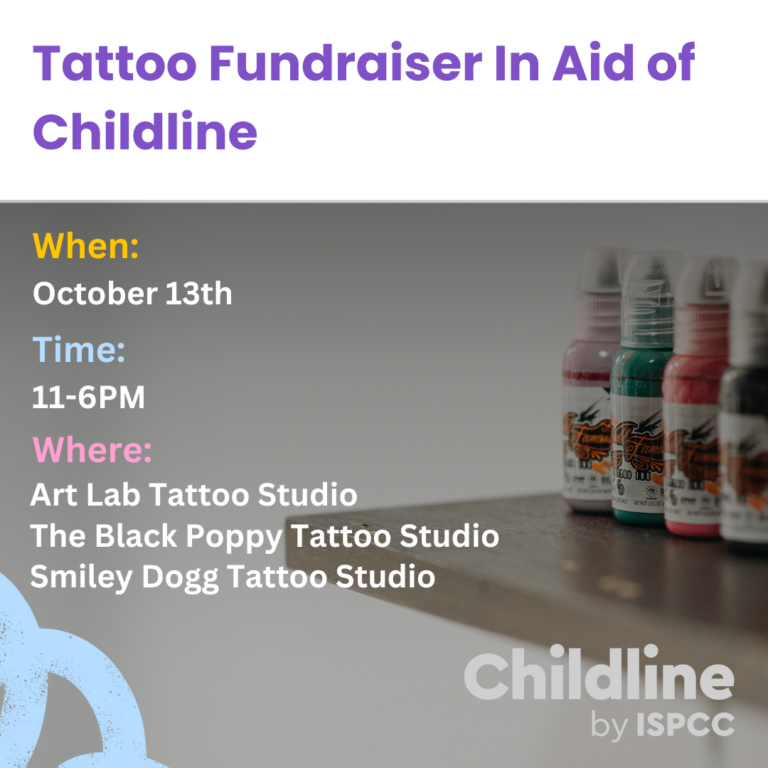
On Friday, October 13, 2023, Black Poppy, Smiley Dogg and Art Lab will donate 100% of their profits to ISPCC. Customers can choose from flash sheets ranging from €60 to €100, while temporary tattoos are also available, including Childline-related symbols and Friday the 13th effects. 

The three shops will be open from 11am to 6pm, and people can donate in each studio when they’re paying for their tattoo. Those who are unable to make the event or want to make an extra donation can go to the Childline idonate page: https://www.idonate.ie/cause/ISPCC

For Dee Byrne of Smiley Dogg Tattoo, teaming up with their supposed rivals was an easy decision. “By uniting with other tattoo studios in the community in support of the Childline fundraiser, we are demonstrating that art, compassion and collective effort can bring about meaningful change,” says Dee. 

She adds that Childline’s mission of providing a lifeline for vulnerable children and adolescents resonates deeply with her and her fellow creatives at Smiley Dogg Tattoo, which has two branches in Cork city – at North Main St and Oliver Plunkett Street. 

“We hope that by engaging in this fundraiser, we can channel our creative passion into making a difference in these young lives. Each ink stroke will serve as a symbol of optimism and hope, a testament to the resilience of these youngsters and a reminder that art can go beyond visual appearances to positively impact lives.”

Dee’s feelings are echoed by Jacob Stahlecker, co-owner of Black Poppy, which is located on Father Matthew St, who says that the artists at the studio have been committed to giving back to our adopted homes and community since it opened in 2020. He is very happy to support the fundraiser for Childline, a service that provides support for all children and young people, no matter what’s on their mind. 

ISPCC needs to raise over 75% of its funding through donations each year to ensure we can be there to support children and young people 24-hours a day, 365 days of the year.  We rely on the generosity of the public and are grateful for all support. We encourage children to reach out for any reason.


ISPCC CEO John Church appointed to the Board of Mental Health Reform

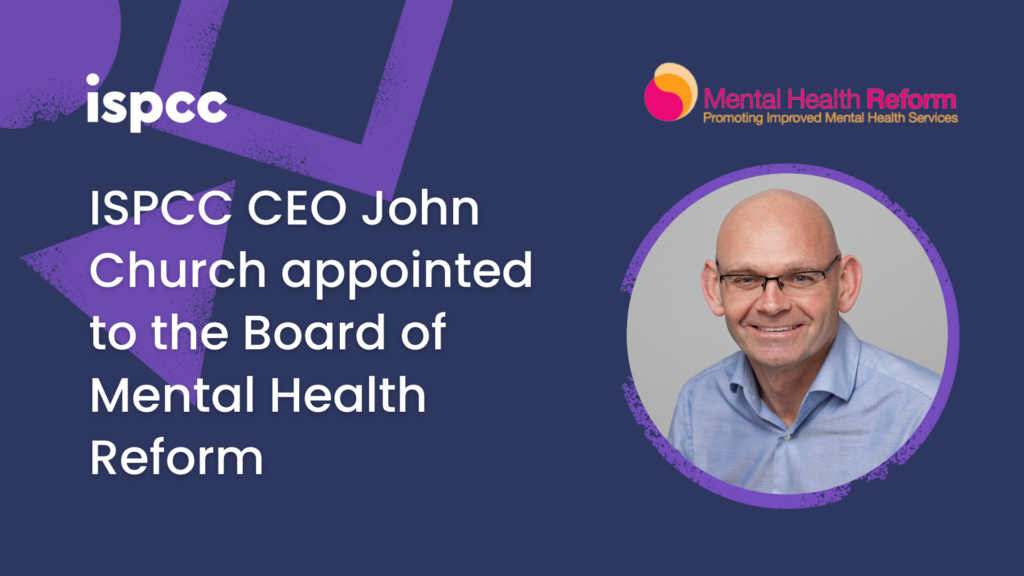
John Church, ISPCC CEO, has been appointed to the Board of Mental Health Reform (MHR) following the ratification of his nomination at today’s annual general meeting in Coleraine House, Dublin 7. 

John is a leading voice for advocacy for children and young people in Ireland. The areas of online safety for children and young people coupled with their mental health and well-being have been a particular focus for John since assuming the CEO role at ISPCC in 2018. 

Commenting on his appointment John said: “I am proud to join the MHR Board and I look forward to working with my fellow board members to tackle the mental health challenges currently faced by children and young people in Ireland. At ISPCC, mental health concerns are one of the primary reasons why children and young people use our services. I believe that the Government must commit to a policy of both targeted and universal investment in mental health service provision for all children and young people. 

“We reiterate our call for Government to commit with haste to the implementation of the Pathfinder interdepartmental unit on youth mental health in order to align and streamline the mental health responsibilities across various government departments.”

Continued Church: “This has been a key policy ask of the ISPCC since it was first recommended in the National Youth Mental Health Task Force Report in 2017, of which ISPCC was a member. There can be no further delay if we are truly committed to providing a world class mental health service to children and young people across Ireland.”

The ISPCC is a proud and active governing member of Mental Health Reform and looks forward to working with fellow board members to deliver on MHR’s new ambitious strategic plan. 

ISPCC partners with TU Dublin to combat child grooming


The ISPCC is proud to be a member of the GroSafe
research team led by TU Dublin and funded under Science Foundation Ireland’s
National Challenge Fund – OurTech. The aim of the GroSafe team is to develop a
technology-enabled solution designed to build societal resilience against child
grooming.

Grooming refers to someone building a relationship
with a child or young person in order to manipulate, exploit and/or abuse them.
It can happen both in person and online. Incidences of children and young
people being targeted often go unreported and, consequently, we don’t fully
understand the extent of the problem and how these acts are committed. 

A
further consequence of this lack of understanding is whether the supports and
systems in place are equitable in helping people to report such crimes against
children.

The development of GroSafe will help to
overcome the existing obstacles to increase reporting rates in our communities.
This will enable the more effective allocation of resources and ultimately
reduce harm to one of society’s most vulnerable populations.

Parents and caregivers want to keep their children
safe but, unfortunately, it’s not possible to keep an eye on a child 24 hours a
day and it’s even more challenging when they go online.

Some indications of children and young people being
groomed include becoming secretive about how they are spending their time both
online and offline, having gifts that they can’t or refuse to account for and demonstrating
sexualised behaviour, language or an understanding of sex that isn’t
age-appropriate.

Products and services built on end-to-end
encryption can adversely affect the detection of such behaviour. This means
that it’s crucial for children, young people and their families to be empowered
to identify these harmful activities and to report such crimes.

Fiona Jennings, ISPCC Head of Policy and Public
Affairs, said: “The grooming of children for nefarious means is a complex issue
and can have devasting consequences for all involved. Awareness is crucial as
often victims and their families don’t recognise when they are being groomed.  

“The GroSafe team proposes to develop a
technology-enabled solution that increases this awareness and signposts to the
appropriate supports, including reporting.

“The use of technology is ubiquitous among children
and young people today. Therefore, it is important that we leverage this usage and
develop an appropriate solution in this environment. This invaluable
information will then help us to inform children, young people, their parents
or carers about emerging and evolving threats and to inform and improve our
policy responses.”

The collaborative research team comprises
TU Dublin researchers and the ISPCC as societal impact champions.

It is imperative that we all work
together to ensure children and young people are safe and protected, however we know from those who contact Childline
that this is not always the case.

ISPCC welcomes the official establishment day of Coimisiún na Meán

glossary
glossary

ISPCC welcomes the official establishment day of Coimisiún na Meán which has been set up in accordance with the Online Safety and Media Regulation Act (OSMR).  

It is a great development to see Niamh Hodnett take on the role of Online Safety Commissioner. ISPCC has campaigned for the establishment of such an office since it was recommended by the Law Reform Commission in 2016. 

We commend Minister Catherine Martin for empowering the Online Safety Commissioner to develop binding online safety codes that hold designated online services to account for how they deal with harmful online content.

John Church, ISPCC CEO, said: “The establishment of Coimisiún na Meán and the office of Online Safety Commissioner is a crucial step in improving the safety and experience of children and young people in the ever-changing digital landscape. This is an extremely positive day for children and young people and we look forward to supporting the Coimisiún in any way we can.”

ISPCC calls for Government commitment to meaningful investment in mental health provision for children and young people

ISPCC calls for Government commitment to meaningful investment in mental health provision for children and young people

Children’s mental health was in the spotlight again today as the Children’s Rights Alliance (CRA) launched its Report Card 2023 and for the second consecutive year awarded the Government an ‘E’ grade in relation to youth mental health.

Children have a right to appropriate care, and at ISPCC we know the importance of prevention and early intervention. The Government must commit to a policy of both targeted and universal investment in mental health service provision for children and young people. 

We reiterate our call for the Government to commit with haste to the implementation of the Pathfinder interdepartmental unit on youth mental health in order to align and streamline the mental health supports across various government departments. 

ISPCC CEO John Church says “This has been a key policy ask of the ISPCC since it was first recommended in the National Youth Mental Health Task Force Report in 2017, of which ISPCC was a member. There can be no further delay if we are to truly recognise the health rights of children and young people and to employ best efforts to have a world-class mental health service.”

It is a mammoth task to issue an annual report card and we commend the CRA for all its efforts in doing so. 

The Government’s ‘E’ rating in this year’s CRA’s report card – a grade awarded due to the long waiting lists facing young people requiring support from Child and Adolescent Mental Health Services (CAMHS) – shows the need for this administration to demonstrate that it considers the mental health of children and young people to be a key priority. 

ISPCC shared the sense of shock felt by many on the publication of the interim report by the Mental Health Commission into the Child and Adolescent Mental Health Service in January. 

CAMHS is illustrative of the crisis facing the health service. Yet, sadly, this is not a surprise for those of us working to support children and young people. 

The ability of CAMHS to provide a meaningful service is also hampered by staffing issues and the slow pace of digital transformation. A digital system that allows for timely monitoring and continuity of care is essential. As it stands, the system is utterly broken, despite the best efforts of those working within it. 

At ISPCC, mental health concerns are one of the primary reasons why children and young people contact us. Calls on mental and emotional health are a top profile in our 24/7 Childline Listening Service. 

In terms of online safety we are delighted to see the Government’s efforts recognised by the awarding of a ‘A’ grade. The Online Safety and Media Regulation Act is a crucial piece of legislation designed to improve the safety and experience of children and young people in the ever-evolving digital environment. However, we strongly believe that there is more work to be done in this area.

We need an updated action plan on online safety, the Online Safety Commissioner must be sufficiently resourced and proposed binding codes must be fit for purpose. 

It is imperative that children and young people can always be safe online, however we know from those who contact Childline that this is not always the case.

Our partner in the Irish Safer Internet Centre, Hotline.ie has helped many of those young people who have been the victims of ‘intimate image abuse’ (IIA) as operators of the reporting mechanism for such images. Under the Harassment, Harmful Communications and Related Offences Act, it is an offence to share an intimate image or video of a person without their consent. 

This is a complicated issue, and ISPCC is grateful to have been involved in consultations regarding the revision of the Relationships and Sexuality Education (RSE) programme for Junior Cycle in post-primary schools. programme. We believe this is a key opportunity for the curriculum to be modernised and respond to the needs of children and young people.

It is crucial that we teach our children how to manage their relationships in a digital world. 

“A truly innovative and dynamic new RSE programme will empower all children and young people, by making them familiar with the concept of sexuality and the distinction between healthy and unhealthy, or inappropriate relationships,” says ISPCC CEO John Church. “This could assist in the prevention of, or early intervention in, potential child sexual abuse cases happening in future.”


Safer Internet Day 2023 is a resounding success in the ongoing work to keep children safe online

February 7th marked the 20th anniversary of the global event which was also biggest one to date in this country

Safer Internet Day, which took place on Tuesday, February 7, 2023, was a resounding success and ISPCC was delighted to be involved in such an important event for children and young people.

Almost 200,000 children and young people throughout Ireland took part in initiatives around the country to mark the momentous occasion.

The Safer Internet Day launch took place in Dublin’s Chocolate Factory and focused on promoting respect and building empathy online. The student-led event included discussions and explorations of the opportunities and challenges as they relate to protecting, empowering and respecting children and young people navigating a digital world.

It was a privilege to listen to the remarkable young people participating in the event share their thoughts, hopes and dreams for the future.

Safer Internet Day 2023 also saw the official launch of the #SilentWitness awareness campaign.

This campaign was developed by Webwise (the Irish Internet Safety Awareness Centre) to explore the topic of online bullying and abuse. Developed in consultation with young people, incorporating the latest research, this campaign aims to spark conversations inside and outside the classroom, in homes, online and in the wider community.

The campaign comprises of three short powerful films which explore the nuances of online friendships, peer pressure, the notion of banter and the impact bullying can have on young people.


The Irish Safer Internet Centre partner organisations work towards a shared mission of making the internet a safer and more inclusive place for children and young people.

We at ISPCC are proud to partner with Hotline.ie, the National Parents Council Primary and Webwise.ie in this crucial endeavour.