
Summer Break, Silent Struggles: Childline reports a rise in suicide contacts

Boys earring wetsuits walking from the beach on a sunny day in autumn. They are on a staycation with their family to lower their carbon footprint and support the local economy.

Summer Break, Silent Struggles: Childline reports a rise in suicide contacts

What will be the most heartbreaking day of the summer? Last year, it was July 20 – the day that Childline received the most contacts from children and young people who were experiencing abuse, neglect and isolation during what is supposed to be the best days of their lives. 

Unfortunately, the summer of 2026 is already shaping up to be a difficult one for many children and young people. The Childline team already has experienced a noticeable spike in contacts related to suicide last week.

The longer days and the break from the routine of school life means that children face an increased risk of isolation, exposure to danger online, abuse and neglect. 

Many of these children dread the summer and count the days to go back to school. There, they can be themselves without fearing the consequences and teachers are available to give them the support that they need.

Take Eabha* who experiences food poverty, social isolation and abuse from her mother who drinks to numb her own pain and takes out her frustrations on her daughter. Eabha will spend the long, lonely summer holidays looking after her young siblings, lying to her friends to explain why she can’t meet them and doing everything she possibly can to ensure that her mother doesn’t lose her temper.

Sam* told a Childline volunteer about how his emotionally abusive family make him feel unloved and unable to express himself for fear of being taunted and bullied. He says that he hates being at home.

For Lily*, a carer for her critically ill parent, school offers a break from the constant pressure she experiences at home. She doesn’t want her friends to pity her so she shares little about what her life is really like.  

Elizabeth Donlon Fox, National Childline Listening Coordinator, says that our dedicated team of staff and volunteers hear similar stories on a daily basis: “When we think of summer, we think of endless, carefree days, but for so many children and young people, it’s a time of isolation, fear and neglect. It is truly shocking what so many young people have to endure and the lasting consequence of this trauma on their lives.”

For so many children, summer is a time of heartbreak, not happiness, but Childline is here to support them 24/7. To support Childline in this crucial work, please donate now.

ISPCC offers support to children and young people at childline.ie and at 1 800 66 66 66. 

  • *Names have been changed

Why a ban will not protect us from the dangers of social media

Why a ban will not protect us from the dangers of social media 

As yet another politician extols the merits of banning social media for those under 16 in the name of online safety, many of us working in children’s rights find ourselves dismayed by the persistence of such quick-fix, headline-grabbing proposals. These measures, while superficially appealing, shift responsibility onto parents and children, rather than addressing the role of the technology companies whose platforms underpin much of the harm. 

On Sunday, June 14th, more than 140 children’s rights organisations across Europe, including the ISPCC, co-signed an evidence-based letter to the European Commission making clear that it is neither fair nor effective to require children to bear the cost of rectifying problems that are fundamentally embedded in the design and business models of online services. 

A blanket ban risks entrenching harm by diverting attention away from where meaningful accountability should lie. Instead, we should be insisting on a strict “safety by design” standard, supported by privacy-preserving and robust age assurance mechanisms. This approach places responsibility on platforms to create safer environments from the outset. 

Efforts to improve online safety must not come at the expense of children’s rights — including their rights to information, education, participation and play. A crude age-based prohibition would not only fail to eliminate harm but would likely displace it, pushing young people towards less regulated or entirely unregulated spaces where risks may be even greater. 

Furthermore, such bans risk diminishing the urgency to address the systemic issues that drive harm online. These include behavioural profiling, addictive and manipulative design features, recommender systems that amplify harmful content and commercial practices that exploit children’s data and vulnerabilities.  

A more constructive response must recognise that responsibility is shared. Parents, platforms and young people all have a role to play.  

Many of the risks children face online stem from the design of the platform. Features that prioritise engagement over wellbeing can expose young users to manipulation, exploitation and grooming — often in ways that are difficult to detect. Children who do not recognise such harms are unlikely to report them. 

It is essential that young people learn to question what they see online, to understand how algorithms shape their experience and to trust their instincts when something feels wrong. The impact of harmful online content inevitably spills into children’s offline lives, affecting their wellbeing. 

At the ISPCC, our priority is to empower young people with the resilience and coping skills they need to thrive in an increasingly complex digital world.  

Our Childline Listening Service operates 24 hours a day, every day of the year, ensuring that any young person who needs to talk will always find someone ready to listen. 

Behind the closed doors of homes across Ireland, many children suffered in silence this Christmas* – but Childline was there for them

Behind the closed doors of homes across Ireland, many children suffered in silence this Christmas – but Childline was there for them

“It’s such a hard time of year to feel so alone, I haven’t spoken to anyone today, I wish things were different, like it is in the movies, but it’s not. It was brilliant to be able to call Childline, I knew that you would be here for me and it does help a little.”  Emma*, 14. 

Today (December 26th) is set to be one of busiest days of the year for Childline with the team expecting that more than 300 contacts will be made to Ireland’s only 24-hour listening service for children and young people  

Dublin, December 26th, 2025 – Childline reveals that today (St Stephen’s Day, 2025) will be the busiest day of the year for Ireland’s only 24/7 listening service as children come to terms with what they have experienced over the Christmas* period.  The dedicated Childline team is expecting that more than 300 contacts will be made from children and young people across Ireland. 

Heartbreaking data also reveals that over a three-day Christmas period (December 23rd, 24th and 25th) whilst many of us were enjoying gifts, treats, twinkly lights and Santa, Childline received 615 contacts from children who turned to the team because Christmas for them was not a time of joy but one of neglect and misery. Shockingly, seven young people turned to us with suicidal thoughts.

Bullying, abuse, neglect, mental health, substance misuse, strained family relationships and grief are just some of the many reasons children turn to Childline – reasons that sadly are even more pronounced during what is meant to be a magical time of the year.

Additional statistics from Ireland’s only 24/7 listening service for children and young people reveal:   

  •                The Childline team spends the equivalent of 146 full days a year talking to children and young people in immediate crisis
  •                35children and young people a year are in the process of trying to take their own life whilst in contact with the Childline team
  •                Childline receives over 2,300 contacts a year in relation to sexual, physical and emotional abuse
  •                300 children a year contact Childline about sexual abuse involving rape and being forced to watch and/or perform sexual acts    

Over the last five years, there has been a noticeable increase in the number of children engaging with Childline who are at high risk of harm. Sadly, such stark revelations come as no surprise to the dedicated team of staff and volunteers at ISPCC.   

The Childline team know they are an essential support for so many neglected children, and Childline is open 24/7 to any child for any reason at Christmas, as it is throughout the year. 

“Christmas is supposed to be the one day when families spend time together in peace and harmony,” said volunteer Joe Keane. “However, for children who call Childline at Christmas, the holiday can be one of the loneliest and most difficult times of the year. As a volunteer, being there on Christmas Day means I can make sure they feel listened to and heard.”

John Church, CEO, ISPCC said: “For too many children and young people, Christmas simply doesn’t happen. Too many don’t have the Christmas that they dream of and deserve. Instead, a day that should be full of joy is nothing special and sometimes a lot worse. They turn to Childline for support, and our amazing staff and volunteers are there for them 24/7 over Christmas, as they are throughout the year. Without help from public donations, we would simply not be able to be here for every child who needs us.” 

To help Childline continue to be there for children go to ispcc.ie   

*Christmas statistics refer to December 23, December 24 and December 25 

* Contacts refers to all contacts (chats/phones) that dial 1800 66 66 66/connect to LiveChat  

Revealed: How one-third of young people* may be addicted to social media

New research shows that one in three young respondents neglects work, family or school several times a week or more because of social media use

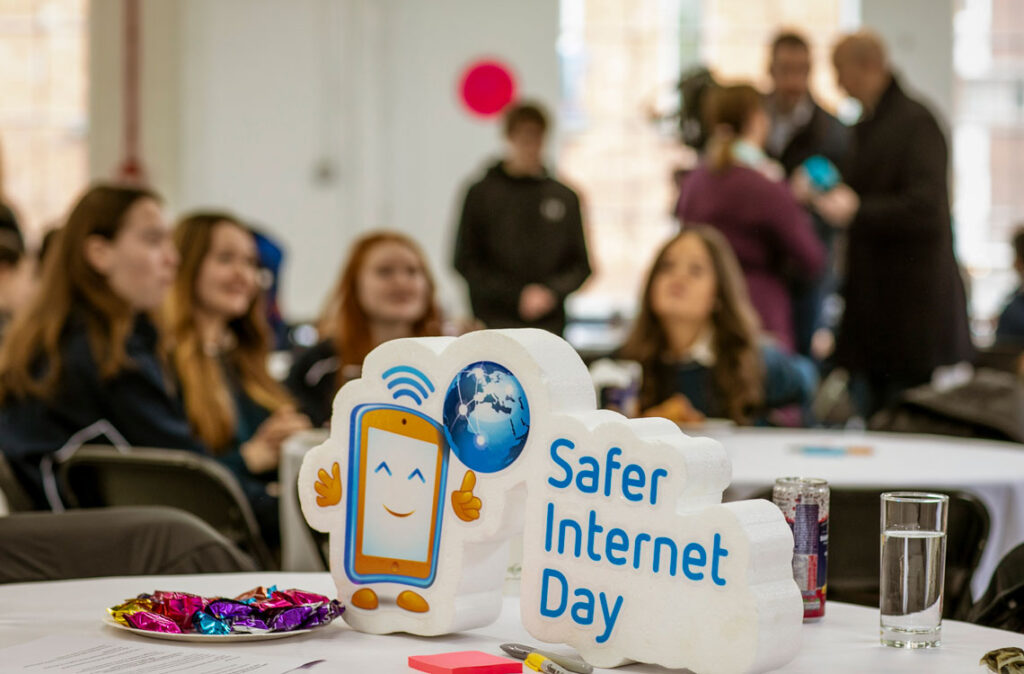
This Safer Internet Day (11.02.25), experts from Ireland and Europe will discuss research revealing concerns over the exposure of young people to harmful content online, powerful algorithms and the need for effective digital media literacy

Dublin, February 11th, 2024:  Today, February 11th marks the 22nd anniversary of Safer Internet Day, a landmark global event in the online safety calendar and celebrated in over 180 countries.

New research from the first ever EU-wide survey on loneliness** indicates that one-third of young respondents exhibit patterns of social-media addiction. They have neglected work, family or school several times a week or more because of their social-media habits. The detrimental impact of this will be discussed today among experts from Ireland and Europe as part of Safer Internet Day.

In the European Commission’s Joint Research Centre study, intensive users are defined as respondents who report that they spend more than two hours a day on social media sites or instant messaging tools. Spending this length of time on social media is associated with a substantial increase in the prevalence of loneliness among young people.  However, researchers also point out that how social media is used matters more than how often it is used.

The Irish Safer Internet Centre knows through engagement with children and young people that they are concerned about navigating the ever-evolving digital landscape, and they freely discuss that they feel they spend too much time online. However, more research is crucial to truly understand the challenges they face. Consequently, the Irish Safer Internet Centre will be devoting additional resources to embarking on continuous research in this area in the coming year.

The theme for Safer Internet Day 2025 is “Prepare / Protect / Thrive: Navigating Algorithms and Influencers.” This theme encourages parents, schools, educators, young people and all stakeholders to consider how algorithms and influencers shape young people’s lives.

The key issues that will be discussed during Safer Internet Day 2025 include harmful online content, safety by design, regulation and children’s rights, among many others.

Safer Internet Day 2025 kicks off today with an event in Microsoft’s Dream Space. It will feature keynote addresses from Professor Debbie Ging (DCU), 5Rights Foundation and the European Centre for Algorithmic Transparency, which is part of the Joint Research Centre at the European Commission. In addition, the event will include contributions from the Online Safety Commissioner Niamh Hodnett; Webwise Youth Advisory Panel; the Competition and Consumer Protection Commission; ISPCC; Media Literacy Ireland; Microsoft, Hotline.ie; and National Parents Council.

Minister for Education Helen McEntee TD said: “As Minister for Education and Youth, it is a key priority of mine to work to safeguard and support the wellbeing of our pupils, students and school communities across Ireland. I am very pleased therefore to join Webwise and the Irish Safer Internet Centre, as well as experts from across Ireland and Europe, in marking Safer Internet Day today and highlighting the key themes of prepare, protect and thrive.

“While technology brings many exciting benefits and opportunities, it can also expose pupils and students to negative impacts. It is imperative that we use every lever available to us to help ensure they can stay safe and have the very best opportunity to thrive.

“I look forward to prioritising this area and to working collaboratively with our pupils, students, parents, teachers, school communities and wider education stakeholders over the months and years ahead to make sure our pupils and students are digitally literate, can safely harness the best of what technology presents and can get a mental break from technology too, to empower them to make friends and enjoy their time at school.”

Jane McGarrigle, National Co-ordinator, Webwise, said: “Technology is everywhere and it isn’t something that should be feared. We believe in encouraging children to engage with new technologies, however we are also cognisant of the importance of preparing them for the dangers they may encounter online. We want to empower them with the coping skills and resilience they need to thrive in the digital world. We also want to assure them that there is always support available if they need it and if they feel that their use of technology has become problematic.”

Online Safety Commissioner Niamh Hodnett said: “Coimisiún na Meán is focused on shaping a media landscape that safeguards the rights, wellbeing and development of children, and their safe engagement online. We are delighted to be supporting Webwise and their Safer Internet Day campaign this which this year is Prepare / Protect / Thrive: Navigating Algorithms and Influencers. Following the launch of our Online Safety Code in October of last year, Coimisiún na Meán’s Online Safety Framework is now in place, and we are continuing to prioritise a safer internet for children and young people.”

Safer Internet Day in Ireland is coordinated by the Irish Safer Internet Centre, a partnership between Hotline, ISPCC, National Parents Council and Webwise, providing a range of complementary online safety services, including an education and awareness centre, child and parent helplines and a hotline. The Centre is coordinated by the Department of Justice and co-funded by the European Union.

*In the EU study, young people are categorised as aged between 16 and 30 years

**The EU-wide study on loneliness (EU-LS) was conducted by the Joint Research Centre as part of a European Parliament pilot project in partnership with the Directorate General for Employment, Social Affairs & Inclusion. To learn more about the paper on Loneliness and Social Media Use in the European Union, click here

[ENDS]

So if you really love Christmas, c’mon and let it show… by wearing a Christmas jumper for Childline

‘Tis the season, so don’t even try to resist… oh no, oh no… Instead embrace that Christmas sparkle. Don’t be a grinch saying ‘where’s me jumper?’, instead get it on for Childline this Christmas…

Getting dressed up is all part of Christmas fun. We’ve thought of the perfect way for you to show off your fabulously festive attire by hosting a Christas Jumper Day in aid of Childline your workplace, school, club or creche. You can even do it virtually for colleagues who aren’t in the office.

Everyone is invited to this fundraiser for Childline, Ireland’s only 24/7 listening service for children and young people.

Go to https://www.idonate.ie/event/childlinechristmasjumperday to set up your fundraising page. When you create your page, Childline by ISPCC will be in touch to help you pick a date for you and your colleagues, friends or family and can post out posters, stickers and balloons if needed!

We will also send you email signature, a zoom/teams background if needed as well as digital posters and proposed social media posts.

We’ve made our list, you see, and we’ve certainly checked it twice!

Together we can make a real difference for children and young people throughout Ireland.

ISPCC needs to raise over 75% of its funding through donations each year to ensure we can be there to support children and young people 24-hours a day, 365 days of the year.  We rely on the generosity of the public and are grateful for all support. We encourage children to reach out for any reason.

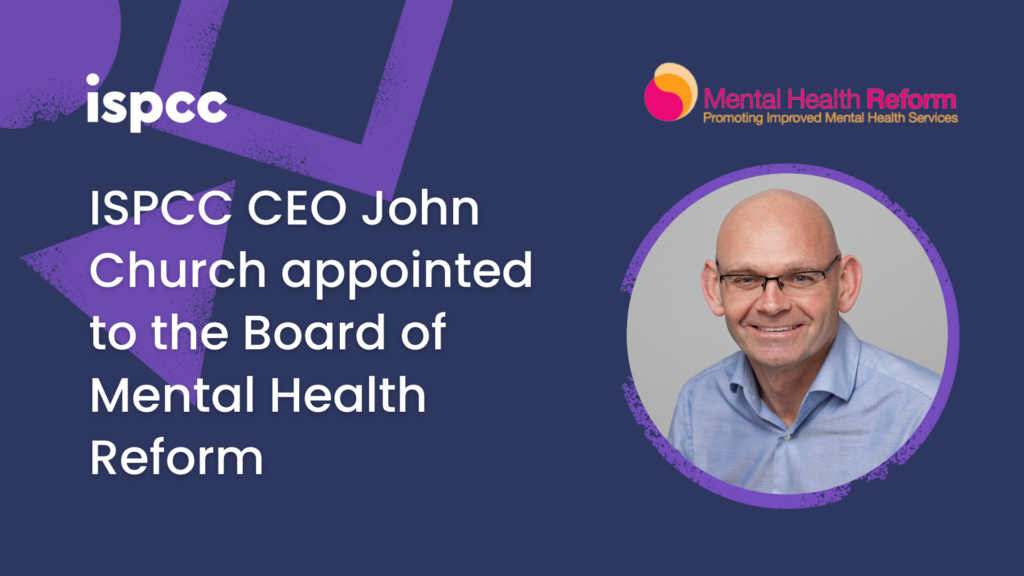
ISPCC CEO John Church appointed to the Board of Mental Health Reform

John Church, ISPCC CEO, has been appointed to the Board of Mental Health Reform (MHR) following the ratification of his nomination at today’s annual general meeting in Coleraine House, Dublin 7. 

John is a leading voice for advocacy for children and young people in Ireland. The areas of online safety for children and young people coupled with their mental health and well-being have been a particular focus for John since assuming the CEO role at ISPCC in 2018. 

Commenting on his appointment John said: “I am proud to join the MHR Board and I look forward to working with my fellow board members to tackle the mental health challenges currently faced by children and young people in Ireland. At ISPCC, mental health concerns are one of the primary reasons why children and young people use our services. I believe that the Government must commit to a policy of both targeted and universal investment in mental health service provision for all children and young people. 

“We reiterate our call for Government to commit with haste to the implementation of the Pathfinder interdepartmental unit on youth mental health in order to align and streamline the mental health responsibilities across various government departments.”

Continued Church: “This has been a key policy ask of the ISPCC since it was first recommended in the National Youth Mental Health Task Force Report in 2017, of which ISPCC was a member. There can be no further delay if we are truly committed to providing a world class mental health service to children and young people across Ireland.”

The ISPCC is a proud and active governing member of Mental Health Reform and looks forward to working with fellow board members to deliver on MHR’s new ambitious strategic plan. 

ISPCC partners with TU Dublin to combat child grooming


The ISPCC is proud to be a member of the GroSafe
research team led by TU Dublin and funded under Science Foundation Ireland’s
National Challenge Fund – OurTech. The aim of the GroSafe team is to develop a
technology-enabled solution designed to build societal resilience against child
grooming.

Grooming refers to someone building a relationship
with a child or young person in order to manipulate, exploit and/or abuse them.
It can happen both in person and online. Incidences of children and young
people being targeted often go unreported and, consequently, we don’t fully
understand the extent of the problem and how these acts are committed. 

A
further consequence of this lack of understanding is whether the supports and
systems in place are equitable in helping people to report such crimes against
children.

The development of GroSafe will help to
overcome the existing obstacles to increase reporting rates in our communities.
This will enable the more effective allocation of resources and ultimately
reduce harm to one of society’s most vulnerable populations.

Parents and caregivers want to keep their children
safe but, unfortunately, it’s not possible to keep an eye on a child 24 hours a
day and it’s even more challenging when they go online.

Some indications of children and young people being
groomed include becoming secretive about how they are spending their time both
online and offline, having gifts that they can’t or refuse to account for and demonstrating
sexualised behaviour, language or an understanding of sex that isn’t
age-appropriate.

Products and services built on end-to-end
encryption can adversely affect the detection of such behaviour. This means
that it’s crucial for children, young people and their families to be empowered
to identify these harmful activities and to report such crimes.

Fiona Jennings, ISPCC Head of Policy and Public
Affairs, said: “The grooming of children for nefarious means is a complex issue
and can have devasting consequences for all involved. Awareness is crucial as
often victims and their families don’t recognise when they are being groomed.  

“The GroSafe team proposes to develop a
technology-enabled solution that increases this awareness and signposts to the
appropriate supports, including reporting.

“The use of technology is ubiquitous among children
and young people today. Therefore, it is important that we leverage this usage and
develop an appropriate solution in this environment. This invaluable
information will then help us to inform children, young people, their parents
or carers about emerging and evolving threats and to inform and improve our
policy responses.”

The collaborative research team comprises
TU Dublin researchers and the ISPCC as societal impact champions.

It is imperative that we all work
together to ensure children and young people are safe and protected, however we know from those who contact Childline
that this is not always the case.