Maintaining positive contact with your child after a separation or divorce isn’t always easy. Here are a few tips to make it easier
Continue readingKrystal & The Queers come out in support of ISPCC ahead of fabulous Cork fundraiser
On May 19, Cork will be buzzing as Krystal & The Queers take to the stage at the city’s Gaia bar on 98th Street for a night of fun and frolics with all funds raised going to ISPCC.
The Cork drag scene is thriving and the unforgettable performances of Krystal Queer and her fellow drag queens Liam Bee and Kia Koke are inspired by the New York club vibe of the 1980s and 1990s.
Prepare to be surprised as Krystal Queer herself has said that you never know what you’re going to get with her. Characters such as Meg Griffin and Marge Simpson may even make special guest star appearances…
All will be revealed on May 19th.
ISPCC, and its suite of Childline services including the 24/7 listening service, is a cause very dear to Krystal Queer.
“This fundraiser holds a special place in my heart as when I was younger, I was deeply affected by the suicide of a friend. Unfortunately, a legion of others can say the same. We want to turn that grief into a positive force and aid Childline by doing what we do best – laughing, dancing and celebrating life.
“Countless young people suffer in silence and darkness so we are pledging to be as loud and as bright as we can be. Everyone’s mental health matters – whether you’re a dentist, a driver or a drag queen.”
Doors open at 6.30pm, the performance starts at 7.30pm and will be followed by a DJ. Tickets priced at €10 are available on Eventbrite https://www.eventbrite.ie/e/drag-show-in-aid-of-childline-tickets-619861310867?aff=ebdssbdestsearch or at the door.
A raffle on the night includes such fantastic prizes as one night B&B at the luxury four-star Kingsley Hotel, a €50 Spitjack voucher and much more.
ISPCC needs to raise over 75% of its funding through donations each year to ensure we can be there to support children and young people 24-hours a day, 365 days of the year. We rely on the generosity of the public and are grateful for all support. We encourage children to reach out for any reason. To donate to ISPCC, https://www.idonate.ie/event/dragshowchildline
What is Neuromarketing and how does it affect our children?
Neuromarketing could play a huge role in the future of advertising so it’s important to be aware of the potential implications
Continue readingHow to help your child (age 7-10) through your separation
It’s important to be open with your child about what’s going on in their life. Here are some tips on talking about parental separation
Continue readingISPCC’s free Space from Anxiety programme is the right prescription for increasing numbers of young people suffering from anxiety
“This programme really helped me to overcome my feeling of depression and low self-esteem,” said one user of ISPCC’s free Space from Anxiety programme, who added that “I could identify the possible triggers and take the necessary actions to relieve them, as opposed to them spiralling out of control and morphing into a mass of negativity.”
Volunteers at ISPCC’s 24/7 Childline Listening service have experienced a rise in conversations amongst children seeking support in relation to anxiety and feelings of low mood and unhappiness. Anxiety is a topic frequently discussed by children who speak with Childline both online and on the phone, says ISPCC Chief Executive John Church.
For those children and young people suffering from low to moderate anxiety, ISPCC can offer a solution – Space from Anxiety. This is a free online CBT-based programme created by SilverCloud, a leading digital mental health provider. ISPCC provides three separate but complimentary Digital Mental Health and Wellbeing programmes, one of which is designed for teenagers experiencing anxiety and two are available to parents/carers of either anxious children or teens.
Space from Anxiety is aimed at 14–18-year-olds, and it is designed to empower young people who experience low to moderate anxiety. Supporting an Anxious Child and Supporting an Anxious Teen are programmes that will help users to understand anxiety and better support their child or young person.
The programme includes interactive tools, activities, mood monitors and journals to encourage users to apply CBT to their own lives. Throughout the duration of the early intervention programme, users will be supported by fully trained ISPCC volunteers.
Dee Higgins, an ISPCC volunteer, believes that the programme is empowering for users of all ages. “It gives parents and young people a chance to deal with their anxieties before it becomes a huge issue,” she said, adding that “if parents can understand what their child is going through, that’s a huge step.”
Users have 12 weeks in which to complete the programme under the guidance of a volunteer and can benefit from an unsupported version of the programme for one year after this time.
There are several ways to access the programmes including making a self-referral through a GP, CAMHS or school.
Dee Higgins says that volunteers build a relationship with users as they support them. “It’s a great resource, there are so many children and young people suffering from anxiety and it gives them a chance to learn the skills to introduce into their day-to-day life and help them deal with anxiety, recognise how they are feeling and understand the physical effects they feel from anxiety.
“Following the programme starts them on the journey to learning the skills to help themselves and others and that’s something they can use for the rest of their lives.”
How ISPCC can help parents of children suffering from anxiety
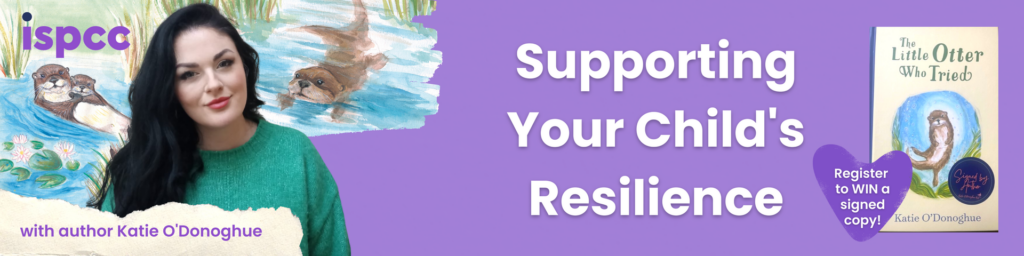
ISPCC and author and illustrator Katie O’Donoghue are continuing their successful series of free webinars for parents and teachers that will provide them tools and tips to help bolster children’s resilience and manage anxiety.
The first in the series which was aimed at parents, focussed on resilience, while the next webinar, taking place on April 25, will help parents to support children suffering with anxiety.
At ISPCC, we know what is worrying children and young people in Ireland; we know what is on their minds and we know how to support them. Through this series of bespoke webinars, parents and teachers will learn skills and strategies for children between five and 12 years of age who are feeling anxious.
ISPCC parenting leads Siobhan Harvey and Niamh Clarke will be joined by author, illustrator and art psychotherapist Katie O’Donoghue, whose second book The Little Otter Who Tried has recently been published by Gill Books.
The Little Otter Who Tried is a beautifully illustrated book that aims to teach children valuable lessons about self-care, resilience and how to ask for help; vital lessons that will be covered throughout the webinar series. Participants will also gain a better understanding of anxiety, as well as increased knowledge of coping skills to support children and a toolkit of resources.
Webinar details are:
Parents – Managing Anxiety
April 25th, 7-8pm
Teaching Professionals
May 9th, 3-3:30pm where both building resilience and managing anxiety will be covered.
Participants who register on ispcc.ie will also be in with a chance to win a signed copy of The Little Otter Who Tried.
ISPCC response to the ‘incomprehensible’ St John Ambulance Child safeguarding shortcomings
The victims and survivors of child sexual abuse and grooming at St John Ambulance are to be commended for speaking out in such difficult circumstances in the pursuit of truth and justice.
Today sees the long-awaited publication of the inquiry into such allegations at St John Ambulance.
Dr Geoffrey Shannon, recently nominated Judge of the Circuit Court, is to be applauded for his forthrightness in laying bare the serious and hugely concerning child safeguarding issues at St John Ambulance, many remaining unrectified to this day.
It is shocking that it is only in light of the report’s publication that St John Ambulance has said it will develop “robust internal accountability frameworks” and committed to employing a full-time safeguarding officer.
The safety of children should always be at the heart of such organisations.
It is incredibly important that when children speak out about such heinous crimes, as they did at the time, that they are believed and that the appropriate policies and procedures are followed. Children need to see something is being done by the adults who are in place to safeguard them. This did not happen at St John Ambulance.
John Church, ISPCC CEO said: “St John Ambulance cadets are children aged 11-18 years of age. It is incomprehensible to learn that any organisation working with and/or involving children did not have a finalised child safeguarding policy in place, a requirement by law.
“Child sexual abuse is deemed an adverse childhood experience meaning children who are subjected to such experiences are potentially at heightened risk of other physical and mental health issues in adulthood. All victims and survivors ought to receive the necessary supports they deserve.”
Whilst St John Ambulance has reportedly stated it undertook a due diligence process in response to the delay in the publication of this report, it is now time it undertakes the same due diligence process to address its child safeguarding obligations. This is not historic child sexual abuse, it is very much abuse that happened in the recent past, and it is difficult to see how such crimes can be prevented from happening again considering the governance issues Dr Shannon has pointed out. No organisation should ever put its reputation before the safety and protection of a child in its care.
The ISPCC notes that St John Ambulance has followed Dr Shannon’s recommendation and offered an apology to its victims and survivors, accepting the shortcomings of the structures enabled the grooming and abuse of children.
It is not enough to proffer an apology, action must be taken to safeguard children at all times.
ISPCC welcomes the official establishment day of Coimisiún na Meán
ISPCC welcomes the official establishment day of Coimisiún na Meán which has been set up in accordance with the Online Safety and Media Regulation Act (OSMR).
It is a great development to see Niamh Hodnett take on the role of Online Safety Commissioner. ISPCC has campaigned for the establishment of such an office since it was recommended by the Law Reform Commission in 2016.
We commend Minister Catherine Martin for empowering the Online Safety Commissioner to develop binding online safety codes that hold designated online services to account for how they deal with harmful online content.
John Church, ISPCC CEO, said: “The establishment of Coimisiún na Meán and the office of Online Safety Commissioner is a crucial step in improving the safety and experience of children and young people in the ever-changing digital landscape. This is an extremely positive day for children and young people and we look forward to supporting the Coimisiún in any way we can.”
ISPCC response to the sentencing today of a man and woman who have been jailed over the rape and abuse of her children
“ISPCC shares the shock and distress felt by so many on hearing the horrifying details of rape and abuse carried out by a man and a woman on her young children following their sentencing at the Central Criminal Court today.
Fiona Jennings, ISPCC, Head of Policy and Public Affairs said: “Parents and those in a parenting role are expected to protect their children and keep them safe, yet in this case it is clear from the sentences handed down that these children did not experience such protection.
“We join with Mr Justice David Keane in paying tribute to the young children at the centre of the case who showed such bravery in recounting the horrendous abuse they were subjected to at such a young age.”
ISPCC welcomes the lengthy sentences handed down to both perpetrators of this shocking abuse and strongly condemns the heinous crimes carried out against these young children. Any child who has been sexually abused must be offered and receive support in a timely manner.
The specialist interviewers must also be commended for their diligence in gathering such harrowing testimony to secure such a substantial sentence. However, it is not acceptable that it took eight years to get to trial and for the children to have to wait such a lengthy period to access justice.
ISPCC reiterates its call for the Government to commit with haste to a national strategy for child sexual abuse as recommended by the Report of the Garda Síochána Inspectorate, Responding to Child Sexual Abuse, 2017.
It is generally accepted that the number of cases of abuse in this country are grossly under-reported and the ISPCC strongly encourages anyone who has concerns about a child to help them disclose these horrific crimes to the authorities.
Such crimes can be reported by contacting An Garda Síochána’s Child Sexual Abuse Reporting Phone Line, which is a dedicated phone line for the reporting of child sexual abuse, on 1800 555 222.
Children must always be protected, and we must do everything we can to ensure that we live in a society that puts children and their needs and rights at the heart of all we do.
How to talk to your child (aged 4-8) about an Absent Parent
Having an absent parent can have a big impact on a child’s life. It’s important to be able to discuss how they feel about it.
Continue reading